The Best How to Replace Bathroom Faucet (2026)
Prices and picks verified as of September 2026. Independent, reader-supported reviews.


Things to Know Before You Buy
- Match the holes first. Your new faucet has to fit the hole pattern already drilled in your sink or countertop. Count the holes and measure the spacing before you buy anything.
- This stays shallow. You work below the shutoff valves rather than inside the wall, so you skip the soldering and the risk of a burst pipe.
- Corroded fittings cause the headaches. The job stays easy until a mounting nut or supply line seizes from years of moisture. Penetrating oil and a basin wrench loosen most of them.
- Replace the supply lines too. New braided stainless lines cost a few dollars and save you from the slow drips that show up months after you reuse the old ones.
- Budget two hours. A clean swap goes fast, but expect a cramped cabinet and old hardware that fights you.
A dripping or dated bathroom faucet sounds like a job that needs a plumber and a Saturday's worth of dread. It rarely does. Swapping a bathroom faucet ranks among the most beginner-friendly plumbing projects in the house, because the parts you touch sit below the sink and below the water shutoffs. You never cut into pressurized pipes, and a careful swap will not flood the room.
Your old faucet creates almost all of the difficulty. A faucet sealed to the deck for fifteen years, with mounting nuts crusted in mineral scale and supply lines fused to the valves, will test your patience long before you unbox the replacement. That stuck hardware is where most weekend jobs stall, so it gets the most attention below.
Below, you will check your sink before you start, sort out which faucet type fits it, pick a replacement you will not regret, dodge the mistakes that cause leaks, and keep the new faucet working for years. You walk away with a leak-free faucet, a job done in an afternoon, and no upsell.
What You Need to Know
Before you buy a replacement, nail down your sink's hole configuration first. Bathroom sinks come drilled for one, two, or three holes, and the faucet has to match. A single-hole sink takes a single-hole faucet. A three-hole sink can take either a centerset faucet (where the spout and handles sit on one base over holes four inches apart) or a single-hole faucet paired with a deck plate that hides the extra openings. A widespread setup, with holes eight to sixteen inches apart, needs a widespread faucet and will not accept anything else. Get this wrong and the new faucet will not mount.
The tools are modest. You need an adjustable wrench, a basin wrench (the long-handled tool made for the awkward nuts behind a sink), plumber's tape, a bucket, towels, and a bottle of penetrating oil for stuck hardware. A flashlight or headlamp earns its keep in the dark cabinet below the sink. That is the whole kit.
You should also confirm you have working shutoff valves under the sink before you commit. Most sinks have two small valves on the wall feeding the hot and cold lines. Turn them clockwise to close, then open the faucet to confirm the water stops. If the valves are missing, will not turn, or keep weeping after they are closed, that is the one scenario where you pause and either replace the valves or call a plumber, because shutting the water off cleanly is non-negotiable for the rest of the job.
Types and Categories
Bathroom faucets sort into a few clear categories, and your sink dictates which one you can use. Single-hole faucets combine the spout and a single mixing handle in one body. They are the easiest to install because there is only one connection point and one mounting nut to wrestle. Centerset faucets mount over three holes spaced four inches apart, with the spout and two handles built onto a shared base. They are the most common configuration in older American bathrooms.
Widespread faucets use three separate pieces: a spout in the middle and two handles set eight to sixteen inches to either side. They look upscale and give you flexibility on placement, but they involve more connections under the sink, which means more potential leak points and a longer install. Wall-mounted faucets come out of the wall above the basin rather than the deck, and replacing one is a harder job because the plumbing lives inside the wall, so most DIYers should leave those to a pro.
Then there are feature categories that cut across all of the above. Touchless faucets add a motion sensor and need either batteries or a nearby outlet, but they keep a manual handle for temperature. Waterfall faucets use a wide, open spout for a sheeting flow that looks dramatic but can splash on shallow basins. None of these change the install method; they add a sensor wire or a different spout shape on top of the same deck-mounting process.
How to Choose
Start with fit, because it is the only factor that can make a faucet impossible to install. Confirm the hole count and spacing on your sink first, then shortlist only faucets that match. A single-hole faucet with a deck plate is the most forgiving choice if you ever want to cover an existing three-hole sink, which is one reason it has become the default for renovations.
Next, weigh the finish against your water and your habits. Chrome is the cheapest and hides nothing, showing every water spot and fingerprint. Brushed nickel and the newer "spot-resist" brushed finishes hide spots far better and are the easy choice for a hard-water home. Matte black looks sharp but shows dried mineral residue and dust, so it rewards regular wiping. There is no wrong answer here, only a trade-off between looks and how much daily maintenance you are willing to do.
Pay attention to the valve cartridge inside the faucet, because that ceramic-disc cartridge wears out and starts the drip years down the road. Faucets from established brands earn the small premium because replacement cartridges stay available and the makers tend to honor their warranties. A no-name bargain faucet can be a fine buy, but if the cartridge fails and no part exists, your only fix is replacing the whole faucet again.
Finally, check the practical details that are easy to overlook: spout height and reach relative to your basin so water lands in the bowl and not on the deck, whether a drain assembly and supply lines are included or sold separately, and the WaterSense label if low flow matters to you. A faucet that fits, resists spotting, uses a serviceable cartridge, and clears your basin will outlast most of the decisions you agonize over.
Common Mistakes to Avoid
The most common mistake is buying the faucet before measuring the sink. You fall for a look online, order it, and discover at install time that a widespread faucet will not fit your four-inch centerset sink. Measure first, then shop.
The second is forcing corroded fittings. A seized supply nut or mounting nut feels like it needs more muscle, but cranking on it can crack the shutoff valve or snap a supply line and turn a tidy job into an emergency. Hit stubborn hardware with penetrating oil, give it ten minutes, and use the right basin wrench instead of brute force.
Reusing the old supply lines is a false economy. They are cheap, they harden and crack with age, and a reused line is the classic source of a slow under-sink drip that you do not notice until the cabinet floor swells. Replace them every time.
Two finishing errors round out the list. Skipping plumber's tape on threaded connections, or wrapping it the wrong direction, invites slow leaks at the joints. And overtightening, especially on plastic mounting nuts, cracks the very part that is supposed to hold the seal. Snug plus a small turn is the target, not white-knuckle tight. Finally, run the water and check underneath for drips before you call the job done.
Care and Maintenance
A new faucet needs little care, and most of that care comes down to water. Wipe the finish dry after heavy use if you have hard water, because the white crust you see on an old faucet is dried mineral deposit that builds up one droplet at a time. A soft cloth and plain water handle daily cleaning; for stubborn spots, a 50-50 mix of white vinegar and water dissolves scale without harming the finish.
Avoid abrasive pads and acidic or bleach-based bathroom cleaners on the faucet body. They strip the protective coating off brushed and matte finishes, and once that coating is gone the metal underneath spots and pits much faster. The gentlest cleaner that does the job is the right one here.
The one part that wears is the aerator, the little screened tip on the spout. Mineral buildup there is the usual reason a faucet's flow goes weak or starts spraying sideways. Unscrew it by hand or with tape-protected pliers, soak it in vinegar overnight, rinse, and reinstall. Doing this once or twice a year restores the flow without any tools.
If the faucet develops a drip, the culprit is usually the cartridge inside, not the whole fixture. On a known-brand faucet you can buy that cartridge and swap it in twenty minutes, which is why choosing a serviceable faucet at purchase time pays off later.
Our Top Picks
If this is the moment to upgrade rather than reinstall the same style, three replacement faucets stand out across different budgets and priorities. Each fits a standard single-hole sink, which keeps the install simple. Confirm your sink's hole layout before ordering, then check the current price on Amazon.

Editor's Pick
Yodel Faucet Chrome Touchless Bathroom
A touchless single-hole faucet that keeps a manual handle for temperature, so you get hands-free convenience without giving up control. The single-hole mount makes it one of the easier upgrades to install yourself.
$69.99
Check Price on Amazon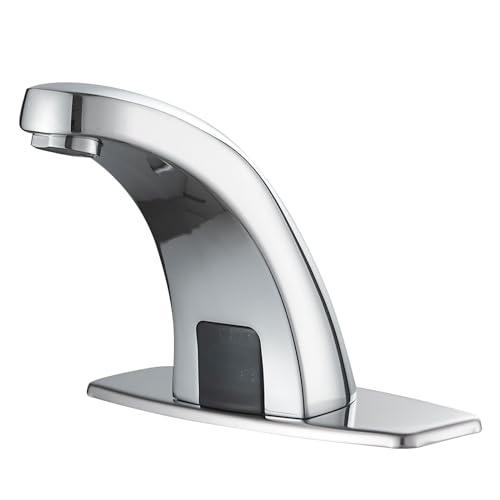
Best Value
Bathfinesse Touchless Bathroom Sink Faucet
A lower-cost touchless option for anyone who wants sensor activation without paying a premium. It mounts on a standard single hole and is a sensible choice if this is your first faucet swap.
$43.99
Check Price on Amazon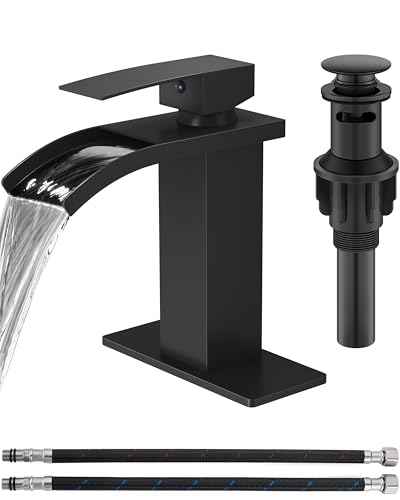
Premium Choice
GBBNE Waterfall Bathroom Faucet 1
A single-handle waterfall faucet for anyone who wants a bolder spout without a complicated install. The wide, open flow looks great, though it works best over a deeper basin so the water does not splash over the edge.
$34.19
Check Price on AmazonHow long does it take to replace a bathroom faucet?
For a straightforward swap where the old faucet comes off cleanly, plan on one to two hours.
Do I need a plumber to replace a bathroom faucet?
Usually not.
Frequently Asked Questions
How long does it take to replace a bathroom faucet?
Do I need a plumber to replace a bathroom faucet?
How do I know how many holes my new faucet needs?
Do I need to turn off the main water supply?
Can I reuse my old supply lines and drain?
Verdict
Replacing a bathroom faucet is well within reach for most homeowners, and it is one of the few upgrades that delivers an obvious daily payoff for an afternoon's work. The job lives below the shutoff valves, so the risk stays low as long as you confirm the water stops before you start. Spend your effort where it counts: measure your sink's hole layout before you buy, choose a faucet with a serviceable cartridge from a brand that stocks parts, and treat corroded fittings with patience and penetrating oil rather than brute force. Replace the supply lines while you are in there, use plumber's tape on threaded joints, and resist the urge to overtighten. Then run the water and check underneath for drips before you declare victory. Do those things and you end up with a faucet that does not leak, a service call you never had to pay for, and a job you can say you handled yourself. The next one will be even easier.